I. Revisionist Adaptation (The Evolution Thesis): This central view features the newly reconstructed Columns XI–XIII, analyzing Hierocles' ideas as a physicalist model of evolution long before Charles Darwin. It integrates modern biological spectrum casework on animal behavior and kin selection to validate the ancient text on its merits, supported by the SBL edition by I. Ramelli.
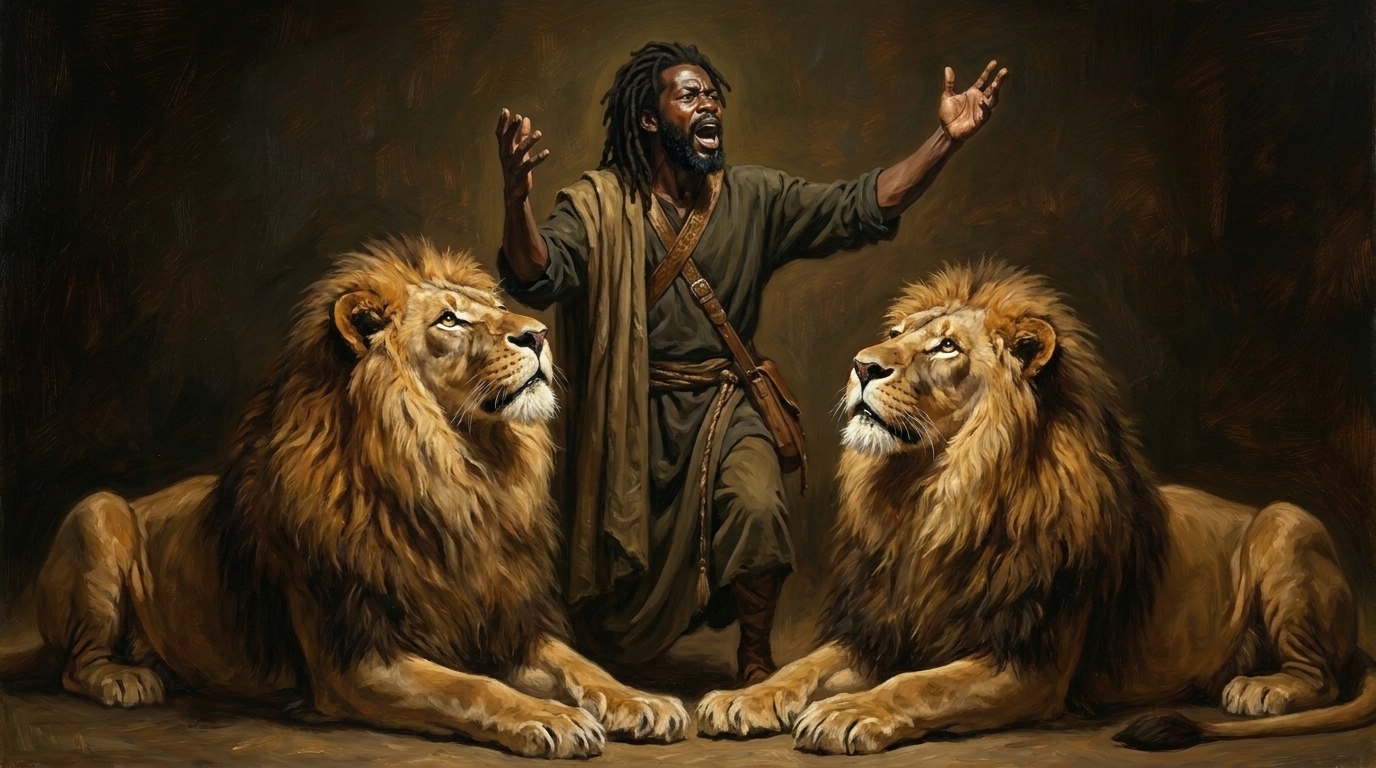
Definitive Proclamation of the Thesis
In this video recording, the definitive moment of the thesis is proclaimed: Hierocles bridges the gap between biological self-perception (physics) and ethical duty (morality), showing that the self-love of the newborn animal is the sole empirical foundation for cosmopolitan concern.
Section I: The Physiopneumatic Birth
Fetal Breath to Perceptive Soul...proceeding from the beginning to the end in preestablished order. Now, in the first phases... the pneuma is a kind of particularly dense pneuma and far removed from soul; following this... it thins out, buffeted as it is by continuous doings, and, in respect to quantity, it is soul...
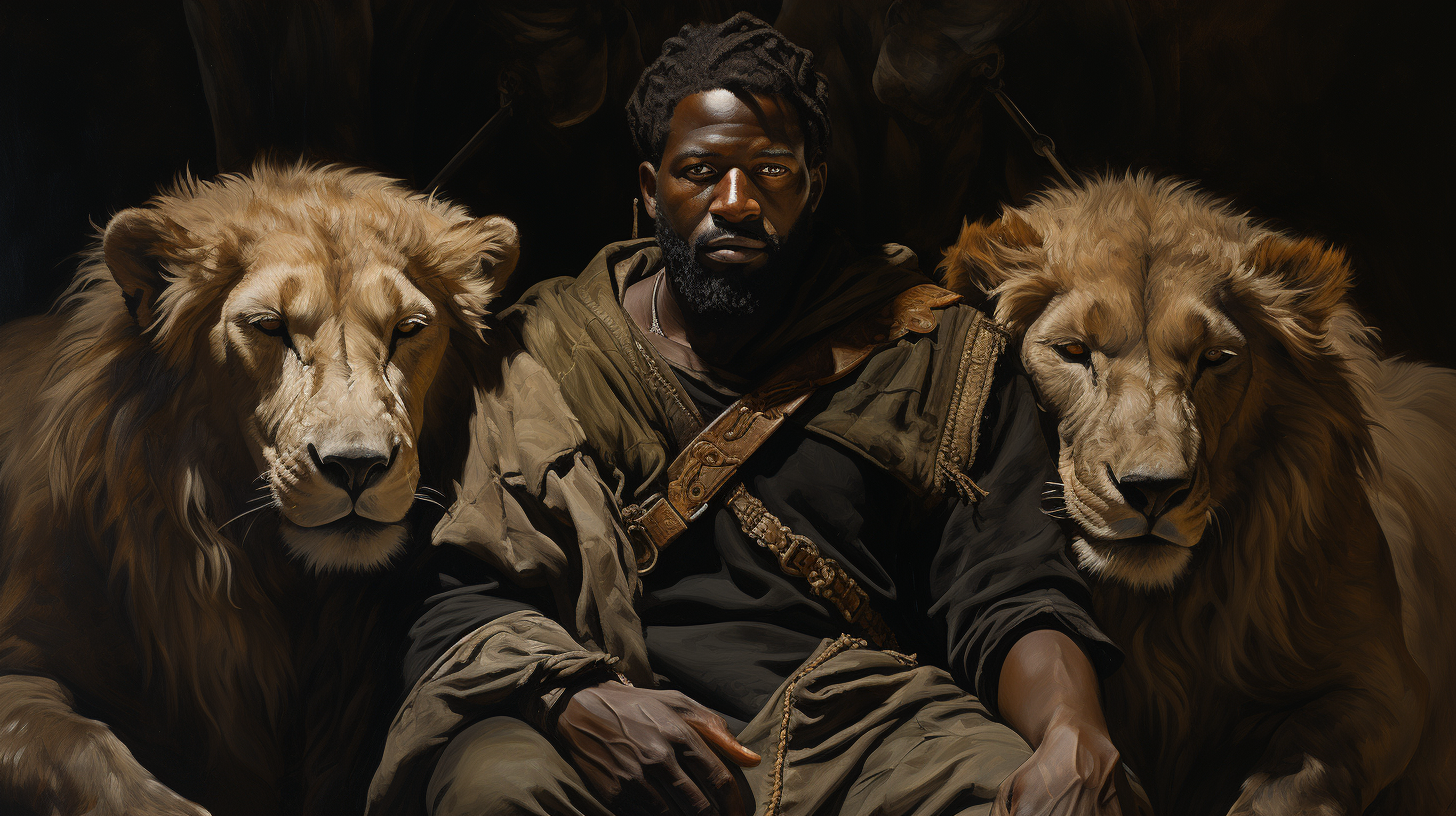
...The fetal pneuma remains a vegetative nature (physis). At the moment of birth, the physical shock of the outer cold air acts as a catalyst, tempering the breath. It thins out (manosis) and is transformed into soul (psyche).
Jowett's Reconstruction & Ramelli Synthesis: Jowett introduces the metaphor of breath in a stone sparking with flame to illustrate the materialist tempering of fetal pneuma. This aligns with Ramelli's Commentary Note 6, which details Chrysippus's doctrine (SVF 2.806) that the fetus in the womb is vegetative nature, and at birth is cooled (psyxis) and tempered by environmental air to become soul (psyche). Jowett's commentary on veganism as a dietary hegemony directly reflects the Stoic division in Note 2 regarding the primary orientation (proton oikeion) of living things: the emergence of somatic consciousness separates the vegetative plant from the evaluative animal, grounding ethics in the physics of nourishment and life-preservation.
Section II: Sunaisthesis & Animal Defense
Continuous Self-Awareness...the asp will be found to have understood clearly that it has at its disposal tail parts that are vulnerable, whereas it is furnished with a weapon... namely, its mouth... beaver testicles... lion watching bull's horns... chicks hiding from falcon...
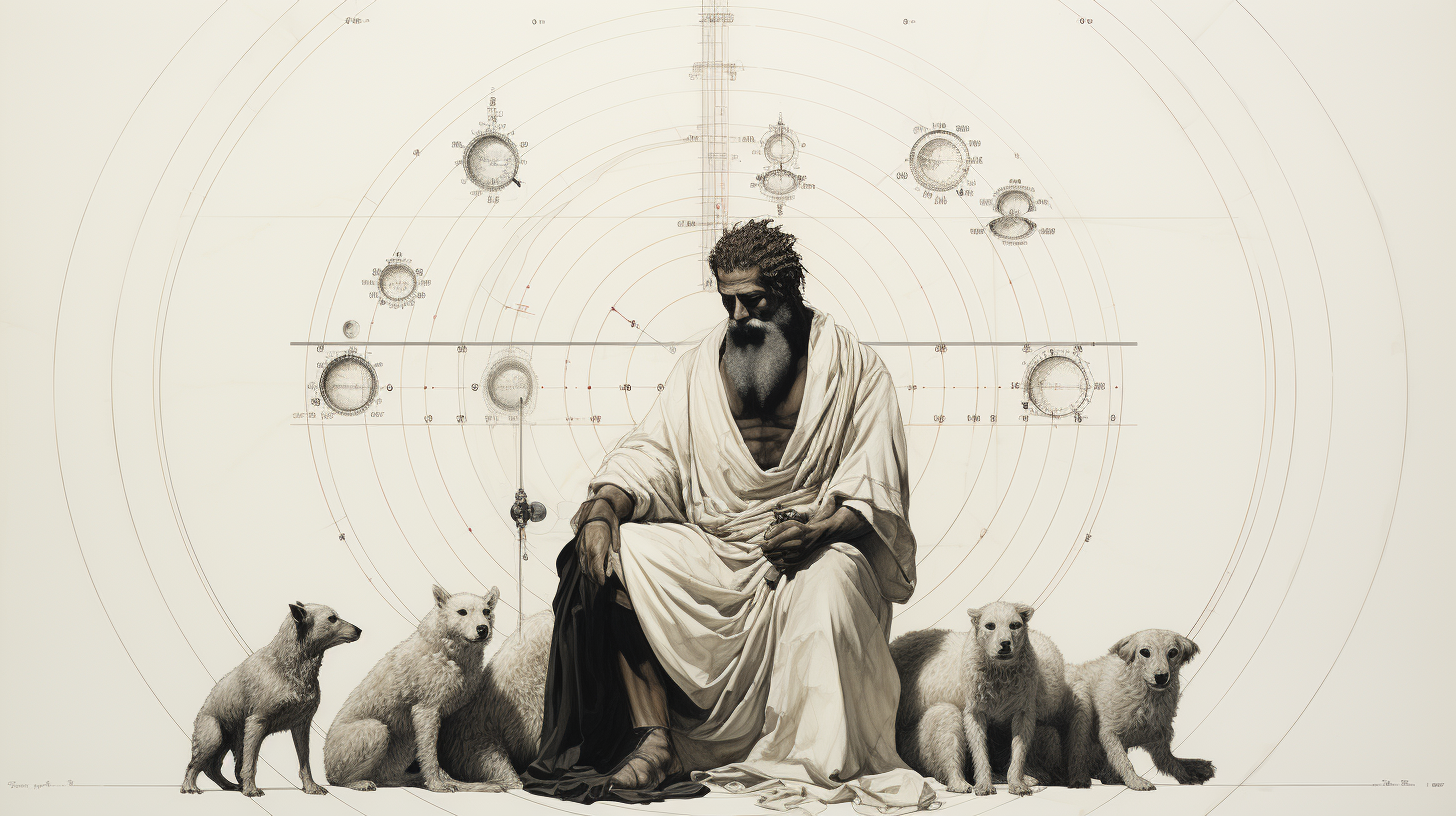
...These biological examples prove that an animal continuously perceives its own constitution (systasis) and capabilities. Sensation requires an underlying self-perception (sunaisthesis) that persists even during sleep.
Jowett's Reconstruction & Ramelli Synthesis: Jowett's adaptation adds strategic political/military color: framing the beaver's self-castration as a form of spy-craft and sabotage to secure survival, and detailing the toad's precipice calculation. This aligns with Ramelli's Commentary Note 41, which points out that Hierocles introduces these biological weapons as an anti-skeptical thrust: proving that self-perception is not a late cognitive development, but an active, innate property of the soul. In evolutionary terms, these "sabotage" behaviors illustrate the high cost threshold of survival adaptations, which are validated by the modern biological spectrum:
- Sensory-Evoked Phenotypic Plasticity: Water fleas (Daphnia pulex) develop defensive neckteeth or helmets only in the presence of predator chemical signals (kairomones), verifying Jowett's model of sensory-evoked morphological adaptations.
- Epigenetic Phase Shifts: Solitary locusts (Schistocerca gregaria) change into gregarious swarmers via serotonin triggers from physical leg stimulation, showing that somatic contact alters behavioral disposition.
- Costly Autotomy: Lizards (Uta stansburiana) drop their tails under threat, mirroring Jowett's "sabotage" beaver castoreum stratagem where immediate tissue is sacrificed to secure genetic survival.
- Nociceptive Homeostasis: Organisms maintain physical boundaries by minimizing prediction errors (Friston's Free Energy Principle) between internal homeostatic states and external threat indicators.
Section III: Sunaisthesis & Body Schema Extensions
Continuous Self-Perception and Extended Cohesion...the soul is not enclosed in the body like a bucket... but blended like red hot iron, so that they share all effects... even in sleep we perceive ourselves... the miser holding tight his purse in sleep, the drunkard sleeping with his flask... Heracles sleeping grasping his club...
...The soul is a cohesive, physical force (pneuma) with tensive movement (tonos). Self-perception is continuous, persisting even in sleep. Organisms extend this internal tensive mapping to encompass external objects of care.
Jowett's Reconstruction & Ramelli Synthesis: Jowett's adaptation frames the miser's purse and drunkard's flask as external cohesion, where the soul treats tools/objects as part of its own physical layout. This maps to the modern neuroscience concept of tool-use body schema extension. Sensation requires continuous somatic tension. In Jowett's commentary, nutrition and diet are the core engines of the soul's tensive motion (tonos). This is synthesized against Commentary Note 4, which describes the paternal seed's systematic development, requiring homeostatic energy. Jowett's addition of "nutrition as hegemony" proves that the physical soul requires material inputs (diet) to maintain continuous self-perception and survival capacity.
Section IV: Social Oikeiōsis & Circle Contraction
Cosmopolitan Scaling of Concern...first, it is necessary to consider that we are an animal, but a sociable one and in need of others. Because of this we dwell in cities: for there is no human being who is not part of a city. Then, we easily form friendships... And this is the most wondrous of all...
...[XII, 45] ... it [was] discovered ... human beings and ... [55] the end [telos] for us must be considered further ... since also ... strongest ... [60] [papyrus breaks off]

...This sociability is "the most wondrous of all," as seen in the Socratic ideal of friendship arising even between members of enemy armies. Nature's affinity is so strong that it bridges political divides.
Therefore, we must state how the appropriation (oikeiōsis) toward oneself extends to society. The mind, being rational, scales its concern through concentric circles: the first is our own body; the second contains parents, siblings, spouse, and children; the outer circles encompass Deme-members, fellow citizens, and finally the entire human race.
Jowett's Reconstruction & Ramelli Synthesis: Jowett's adaptation (Section 5) details the debate between Chrysippus and Cleanthes over original disposition, and introduces the baby bird that grows wider, stronger wings. This directly maps to Ramelli's Notes 53-54 ad Col. VIII/IX, which outlines their debate on Zeno's concept of representation: Cleanthes defines it as a rigid "imprint" (like a ring in wax), whereas Chrysippus defines it as a dynamic "alteration" (heteroiōsis) of the soul. Jowett translates this into a biological framework: Chrysippus's alteration represents **phenotypic variation** and **adaptive evolution**, where the offspring's "indefinite representation" is physically molded by selection pressures. The baby bird's physical variation (wider wings) represents a positive somatic mutation that is favored by natural selection.
Section V: Lost Column XII Outcomes & Jowett's Allegorical Reconstructions
Alternative Speculative Paths in Ramelli's FootnotesIn her SBL commentary and footnotes, Ramelli outlines three distinct trajectories hypothesized by commentators to complete the lost columns following the papyrus's abrupt break at Column XII:
1. The Parental Affinity (Stergê) Path: Found in Cicero (De Finibus 3.19.62ff), which traces the biological origin of social oikeiōsis to parents' natural affection for offspring. Altruism is a direct expansion of reproductive self-love.
2. Hans von Arnim's Spontaneous Friendship: Suggesting that the "most wondrous thing of all" at Col. XI.20 is friendship arising spontaneously between opposing soldiers of enemy armies. This indicates that natural human sociability overrides political divisions and conflict.
3. Bastianini & Long's Deontological Continuity: Proposing that the text transitioned to appropriate actions (kathēkonta) and virtues, seamlessly connecting the physical foundations of the papyrus to the Stobaean extracts on household, marriage, and civic duties.
Jowett's Reconstruction & Ramelli Synthesis: Jowett's speculative reconstruction (Section 6-7) introduces baby Hercules strangling Hera's serpents, the "governor-general" deploying troops, and the Spartan charge against Athens. This synthesizes Ramelli's three trajectories into a coherent sociobiological model:
- Hercules & The Serpents (Innate Tonos): The baby Hercules strangling serpents represents the primary tensive motion (tonos) and self-perception of the newborn overcoming environmental pressures. It is the raw materialist basis of survival.
- The Mother's Love (Kin Selection): The mother protecting her offspring even when they boast unusual traits represents Cicero's sterge, mapped to Hamilton's Rule ($rB > C$). In cooperative breeders like meerkats (Suricata suricatta) and wild dogs (Lycaon pictus), this biological stergē scales altruism to inclusive fitness groups.
- Spartan Charge vs. Enemy Friendship (Reciprocal Altruism): The conflict of Sparta vs. Athens and the governor-general represents the group-selection limit. Von Arnim's "enemy soldier friendship" represents Triversian reciprocal altruism and the Iterated Prisoner's Dilemma (Generous Tit-for-Tat), where cooperation emerges as a stable evolutionary strategy (ESS) to transcend group warfare.
- The Governance of the State (Duties / Culture): The governor-general's deployment of rules represents E.O. Wilson's model of human eusociality, where cultural duties (kathekonta) and the "Onomastic Stratagem" act as group-selected cultural hacks to scale cooperation globally.
Ethics Under the Empire
A Dialectical Analysis of the Jowett Adaptation, Philological Suppression, and the Silent Hegemony of Stoic Physics. It is a profound irony of Roman scholarship that a dead emperor's (Marcus Aurelius's) unstructured campaign diary is romanticized as the pinnacle of Stoicism, while Hierocles' systematic physicalist thesis is largely ignored.
I. The Institutional Diagnostics Suppression as Imperial Utility
Was the historical fragmentation and eventual loss of Hierocles' systematic text a historical accident, or was it a vital necessity for the preservation of Roman imperial institutions? We analyze the three core dimensions of imperial control: military strategy, domestic patriarchal authority, and the economy of slavery.
1. The Military Diagnostic: Cosmopolitanism vs. Roman Imperium
Hierocles' physicalist model of oikeiosis establishes that human sociability is a fundamental law of physics. This scales to the entire species, culminating in Hans von Arnim's (1906) famous hypothesis of spontaneous friendship between soldiers of opposing armies (Col. XI.20).
For a Roman Empire built on continuous aggressive expansion, defensive border maintenance, and the total dehumanization of non-citizens (barbarians), an ethical treatise proving that soldiers of opposing legions are naturally bound by physical pneuma to be friends represents direct ideological sabotage. If Stoic physics is correct, national warfare is a violent negation of nature. Suppressing this systematic thesis was vital for Roman military morale.
Roman military commanders and emperors (most notably Marcus Aurelius) were themselves devout Stoics who saw no conflict between their philosophy and their military execution. Stoic duty (kathekon) was easily adapted to state preservation: the cosmopolitan citizen must fulfill their assigned civic role, which includes the defense of the state against disorder.
The loss of the text was not the result of imperial censorship, but rather the material decay of papyrus rolls in provincial libraries and the selective transcription preferences of early medieval Christian copyists, who favored ethical self-preservation texts over systematic pagan physics.
2. The Patriarchal Diagnostic: patria potestas vs. Biological Stergê
Traditional Roman domestic authority was anchored in the absolute legal tyranny of the patria potestas—the father's legal right of life and death over his household. Hierocles, however, shifts the grounding of domestic concern from legal power to physicalist, biological instinct (parental sterge).
By arguing that family care is a natural scaling of somatic self-love (primary oikeiosis), Hierocles places moral obligation in the biological mixture of the soul-body (krasis) rather than civil law. In a society where family structure was the blueprint for state governance, replacing patriarchal legal dominance with mutual biological reciprocity threatened the civil hierarchy of male authority.
Hierocles' Stobaean extracts (On Appropriate Acts) explicitly defend marriage, household management, and the honoring of parents. Far from subverting patriarchal family structures, Hierocles attempts to provide them with a firmer foundation in Stoic physics.
The text provides a conservative defense of domestic roles, making it highly compatible with Roman civil ideals. The division of labor within the household is framed as a cosmic duty, aligning perfectly with domestic civil authority.
3. The Economic Diagnostic: The Engine of Slavery vs. Cosmopolitan Brotherhood
Rome's economy was fundamentally dependent on the violent exploitation of millions of slaves. Hierocles' systematic physics demands the contraction of the concentric circles of concern, declaring that we must treat Deme-members as family and the entire human race as brothers (the "Onomastic Stratagem").
If we are physically and soulfully mixed with all rational beings, treating a fellow human being as a mere piece of property (instrumentum vocale) is a physicalist self-mutilation. Unlike Seneca's abstract letters, Hierocles' systematic developmental ethics leaves no room for moral compromises, rendering the text economically dangerous to the slave state.
Mainstream Stoicism historically tolerated the legal existence of slavery by defining it as an "external indifferent" (adiaphoron). The soul remains free even if the body is in chains (as exemplified by Epictetus).
Hierocles' concentric circles are cognitive and linguistic strategies to scale empathy, but they do not advocate for the political or economic restructuring of society. The Stoic cosmopolitanism is an internal, spiritual community of reason, not a program for social revolution.
II. Academic Validity of the Jowett Adaptation The Speculative Reconstruction
J.S. Jowett's adapted reconstruction bridges the abrupt truncation of Column XII by completing the text's argumentative momentum. We examine the validity of this composition against philological standards:
Skeptical classicists argue that Jowett's adaptation introduces anachronistic concepts by mapping ancient Stoic physics to modern sociobiology (kin selection, Hamilton's Rule, and reciprocal altruism). Hierocles did not possess an empirical theory of genetic relatedness or game-theoretic stability.
By introducing allegories like Hercules strangling serpents and the Spartan/Roman wars to explain biological selection, the adaptation departs from the strict textual parameters of the surviving papyrus, risking the projection of modern scientific paradigms onto an ancient theological cosmos.
Stoic physics is fundamentally physicalist: the soul is a material gas (pneuma) mixed with the body, and sensation is a physical feedback loop. Jowett's adaptation recognizes that if Hierocles' physicalist premises are correct, they must scale to meet modern biological systems.
By translating ancient observations (like asp tails and beaver castoreum) into the vocabulary of proprioception, phenotypic plasticity, and reciprocal altruism, the Jowett adaptation rescues the text from historical obscurity. It demonstrates that the text's natural trajectory leads directly to these modern scientific models, validating its philosophical consistency.
Are we better off with the adaptation? Hierocles' Elements is not merely incomplete at the end of Column XII; it is heavily fragmented throughout, containing numerous internal physical lacunae, lost lines, and damaged margins in Columns I–XII. Jowett's adaptation is a systemic, text-wide restoration that reframes and bridges these internal gaps (e.g. embryology in Col. I, defenses in Col. IV, sleep in Col. VI-VIII, and the Cleanthes/Chrysippus debate in Col. VIII-IX), reframing the surrounding fragments to fit the replacements seamlessly. This creates a unified, continuous philosophical argument that rescues the entire treatise from fragmented obscurity.
III. The Scholar's Boundary Why was Ramelli Amiss to Complete the Text?
In her 2009 SBL edition, Ilaria Ramelli provides a masterclass in classicist commentary. In notes 54 and 55 ad Col. XI-XII, she outlines the three potential completions of the text (Cicero's stergê, von Arnim's enemy armies, and Bastianini & Long's kathekonta). Yet she stops short of creating a unified speculative reconstruction. Why?
Ramelli's restraint is governed by academic classicism. Speculative reconstruction is historically forbidden in classical scholarship. By leaving the text fragmented, the classicist maintains scientific integrity but leaves the text philosophically disabled. Jowett's adaptation completes the work the scholar was amiss to finish, using the scholar's own footnotes as the blueprint.
IV. Comparative Analysis: Jowett's Reconstructions vs. Traditional Hypotheses Col. XII+ Academic Trajectories
Hierocles' text breaks off in Column XII right at the transition to social cosmopolitanism. Traditional Hellenistic classicists outline three competing trajectories for the lost columns. Here we compare J.S. Jowett's adapted reconstruction (Tab II, Sections 5-7) against these three traditional scholarly paths:
1. Cicero’s Parental Stergê Path vs. Phenotypic Variation
Cicero traces the biological origin of social oikeiosis to parental affection (stergê). In the standard classical view, parental stergê is a conservative biological instinct designed to preserve the existing species form and templates.
Jowett's adaptation (Sections 5 & 6) re-interprets parental care as the biological shield for **phenotypic variation and adaptive evolution**. The mother (protecting the baby bird with wider wings or baby Hercules strangling Hera's serpents) safeguards the offspring precisely because they boast *unusual* and *improved* traits, enabling the survival and propagation of new somatic adaptations under environmental selection.
2. Hans von Arnim’s Enemy Armies Path vs. Game-Theoretic ESS
Von Arnim hypothesized that the missing text described spontaneous friendship arising between soldiers of opposing armies (Col. XI.20) as an abstract realization of shared reason and common humanity.
Jowett's adaptation (Sections 6 & 7) frames warfare (the Spartan charge, Roman commanders) as natural resource competition. However, it resolves von Arnim's hypothesis by showing that cooperation between enemies is an **evolutionarily stable strategy (ESS)**: when conflict reaches strategic or metabolic equilibrium, the rational scaling of *oikeiosis* dictates that reciprocal cooperation (Generous Tit-for-Tat) yields greater thermodynamic stability than continuous war.
3. Bastianini & Long’s Deontological Path vs. Sibling Training
Bastianini and Long argue that Column XII transitioned directly into practical moral duties (kathēkonta) and virtues preserved in the Stobaean extracts (marriage, civic behaviour).
Jowett's adaptation (Sections 6 & 7) frames the family as a **physical training ground**. Parental intervention in sibling rivalry physically trains the child's nervous system to manage "difference" and "indifference." The Stobaean *kathēkonta* are not abstract moral laws, but practical homeostatic feedback loops designed to minimize resource conflict and maximize social cohesion within the state and Cosmopolis.
Divine Elements of Ethics
2nd Ed. 2026. Complete original article from the Pneumatic school, challenging the modern military doctrines.
Source text: Hierocles the Stoic, Ramelli. I. 2009. Reconstructed missing sections integrated within the expected length and format.
The primary title in spite of the unorthodox use of 'elements', as elementary, in the original papyrus bearing the subtitle 'God' (Ramelli. I.: 2009 1:35), sets about this superlative title as illustrated.
breathAptly 'pneuma' – 1. a figuration of pneumatics in modular reference, forms an essential case to follow in tension and tensive (direct) or tensile 'state(s)'. 2. Old Stoic the productive fire that proceeds systematically toward creation (R.I. 2009 5:37).
arriving for its departureReconstructed definition of the framework of transformation.
disposition for alterationRamelli cites ancient variants in breath; psychic, natural and the subsequent Stoic cohesive, which binds even stone. The obvious but plain context is of indigenous "stone age" persons, and typical reactionaries countering modern establishment.
animalMaintaining this awkward definition of all life forms, as those considered to have a soul, is not any other thing born of another fashion than by a uterus and embryo, but the authors original intent for the word which seems to be a minimal standard of the term 'animal' as one orientating of initial or primal awareness, in which most animals readily interacted with, happily pertain to do so in a normal state, and reside with such chance at normality in perpetuity; so hence devoid of the more advanced intelligible, rational and common human standards in communication essential to forming this and any argument. It should be considered no coincidence this original text, recovered on papyrus, which draws so fundamentally on the virtues of the premier society of Rome's ruling class in it's day, and regarding the lifeforms regularly consumed by each and every class within such society but particularly the in-demand requirements of the (aggressive) soldier, was all but destroyed after its essence 'essentially' (base rationality) was subsumed by the subsequent society, and consequential ruling order of Roman Catholics, who thereby incorporating the euphemism of the animals' own primary foundation in a chrysalis as will be discussed in-text in detail, is so, natural to the relationship (and agreement) common between mankind and animals with nature. If the author was indeed a vegan, as diet will be shown an essential element of ethics, this may indeed only be awkwardness and not a prerogative.
To consider the best starting point for this Elements of Ethics is to start a discussion of the first thing that is one's own and so very familiar. I will though maintain that it is no worse for this discourse to commence earlier, and in considering the generation of living things in total. So then what is the initial and primary attributes of an animal begins this treatise.
Whence a seed that drops into the uterus at the right moment is at the same time received by a healthy womb, it no longer stays inert as it was until then, but rather, then set in motion, it begins its proper activities in drawing unto itself the matter of the body that bears it, in forming the embryo in accord with certain arrangements that cannot be transgressed, and until it arrives at its limit and then is rendered as the creature there ready for birth.
However, during all that time which transpires from conception to birth, it remains in the same nature of a breath, transformed from the status of a seed and proceeding from the beginning until the end in a pre-established order. So in the first phases of this period in time, that 'nature' is a kind of particularly dense breath and far removed from a soul. Following however, and once it has nearly arrived at birth, it thins out, buffeted as it is by continuous doings, and, in respect to quantity, it is becoming a soul. At once in its nature then both arriving for its departure, it has resolved in adaptation, and is now a soul.
For, justly described is the breath that is in a stone sparking with flame as a result of a focused blow, whence any common object's disposition for alteration lies in such a way; the nature of a matured embryo is not slow to change into soul, when at pains so emergent with necessity. What is then as such will be described herein, and so considered in sort an animal then and not especially that which lacks the appropriate proportions, as is known with the offspring of bears and other such cases of the sort.
One must of course understand that, from the moment, an animal differs from a non-animal in two respects, that is, in perception [or sensation] and in impulse. For the present, we do not need to discuss the latter, but it is necessary, I believe, to speak, at least briefly, about perception. For it contributes to the knowledge of the 'first thing that is one's own and familiar', which is the subject that we in fact have now said would be the best starting point of this the Divine Elements of Ethics.
Not an incidental description, but pertaining to contestation harboured as race, Ramelli labels (in Heirocles' priority of self-perception) as an antiskeptical thrust (R.I. 2009 11:41).
perceive their own partsExpressly the author intends to show the application of controlled perception – a critical basis in pneumatic philosophy, and where the term perceive is more widely applied than by atypical senses, rather pertaining to a wisdom of the holistic function of a part, and not that exclusively separate.
activitiesPertaining to social construction – this hallmark of the author's 'appropriate acts', assures that a general applicability in analysis, is concentrated as the ethical framework, and evident as the base property of an animals' correct usage of its parts.
conditionExpressly the animal maintains knowledge of a part independently of the usage of the part.
attackIn adaptation for the flexibility of this case, where defense is only a portion of any battle in which animals necessarily participate at times – offence isn't afford the same attention of the author here though it would be right to assume this proposition also extends towards the perceptive capacities of the animal(s) attacking, and that the author originally avoided the military justifications of stoic philosophy.
oversized partsFramed as out of necessity for traversal of precarious territory, the implications more usually in offensive techniques – the benefit of buffed horns or antlers, which may be shed seasonally in routine and due to health reasons still coincides with a dispersal of defensive capacities and the need to defend (or attack).
stratagemThe first definition to makeup a treatise follows the cases for strictly defense, with a complex standard – luring (entrapment), sacrificial offering, or, negotiation with the adversary, depending on the context of the conflict.
castoreumMost indicative of this treatise, this Egyptian myth is expressed disproportionately about the aphrodisiac musk – the gland for the oil in a beaver is of course internal to the beaver and not removable, if the beaver should so be aware that a hunter desired such a part. This in fact forms in contention of the facts, a justification for spy-craft if not general operations such as sabotage, designed to thwart an adversary, and in this case sacrificing the opportunity to produce subsequent generations, indeed, an optimal resolution for a vastly inferior opponent in a battle to the death.
Those far (and slow) to this point, believe, that perception is given by nature for apprehending external objects and not for also apprehending oneself. For those on the other hand who are in such a quandary about how something like this could occur, it is necessary to establish first of all that animals perceive their own parts and also we must attempt to show that this happens in them from the start.
We must, then, understand first of all that animals perceive their own parts. Thus, winged creatures, for example, are aware of the readiness and aptness of their wings for flying. Alternatively, every land animal is aware similarly that it has its own appendages and of each one's use too, just as we ourselves are aware of our eyes and ears and other parts, and as when we require vision we direct our eyes towards the visible object, and not our ears. Yet we when require hearing, we extend our ears for this and not our eyes. Likewise when requiring walking, we don't apply our hands for this immediate purpose, but our feet and entire legs, and in the same way we do not use our legs but rather our hands when required to wield or offer something. Therefore, the first confirmation that the entire animal perceives itself is conscious perception of its parts and of the activities for which parts were given.
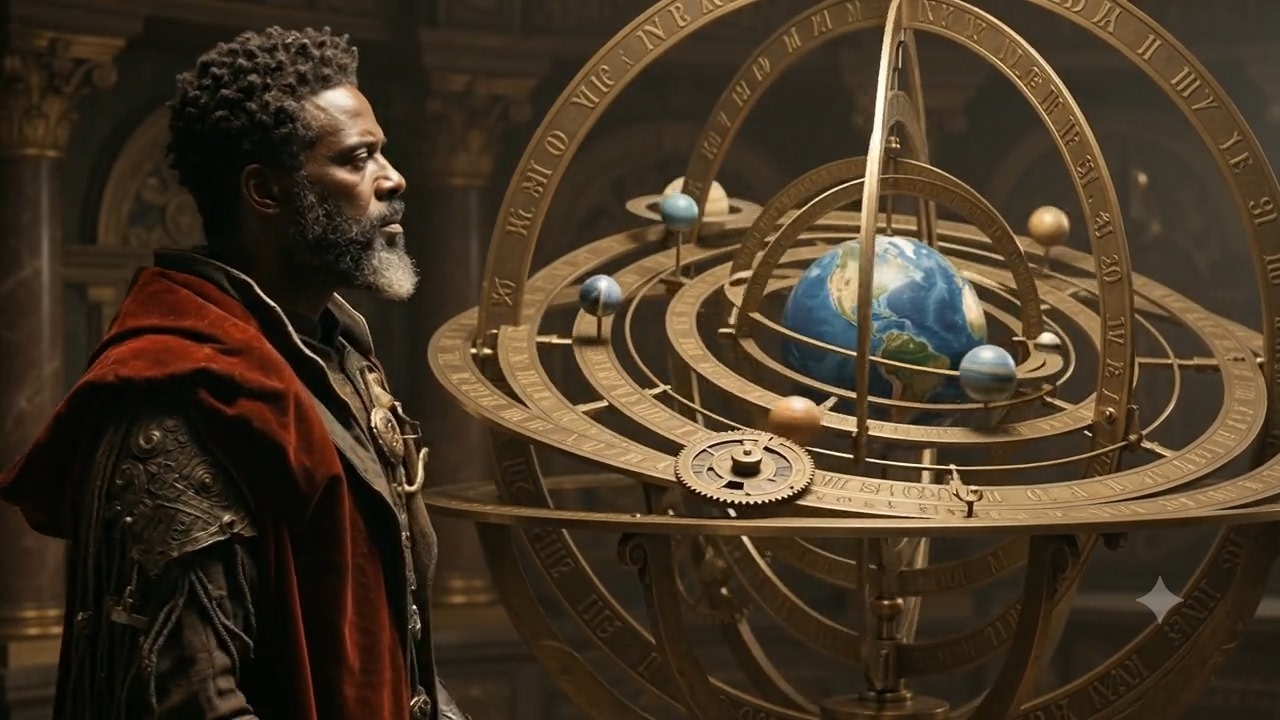
The second confirmation is the fact that animals are not, by condition, ignorant of the things with which they have been equipped for their defence. For bulls, when they are readying themselves for a fight with other bulls or with animals of a different species, thrust their horns forward as weapons grown naturally for battle. Every other animal is similarly disposed towards its own 'inborn weapon'. For some are fortified with hooves, others with teeth, others with tusks, others with spikes, still others with poison, and each and every one employs these for defence in clashes with other animals. In particular, that of the so-called 'spitter' asp is worth recounting, for this beast is so deadly among others of the same name and species, as to kill without a bite, instead indiscriminately shooting poison.
Furthermore, animals also perceive which of their parts are most fit and able to defend or assault. The bull, our first example, will when getting ready to defend itself against an attack, position its horns at its front in alignment with its adversary. The tortoise in turn when it becomes aware of an attack, withdraws its head and feet beneath its shell, that is, those parts of its body which are most easily seized beneath the part which is hard and most difficult to get a handle on. The snail too does something similar, rolling itself up inside its shell when it perceives danger. The bear, for its part, does not seem to be unaware of the vulnerabilities of its head, which is why, when it is beaten with sticks or other objects that can strike this part, it places its paws over it to take the force of the blows. Even when it is pursued, if it sometimes has to hurl itself down a cliff, it flings itself such that each blow on the fall is reduced. The toad too does something of the sort, for it is an animal extremely well suited to leaping and is truly not outdone in jumping by any other animal of its size, where above the distance it calculates the interval. If perchance the toad is pursued along a precipice and is not confident it can leap to the other side, it jumps down instead in such a way as to inflate itself fully and so increase its air resistance to eliminate the destructive potential. And who can fail to be amazed at the stratagem of the deer? For let us grant that there is a disproportion between its legs and horns and that the latter are exceptionally grand and amazing to see, whereas its legs are extremely skinny and easy to despise; yet, nevertheless, it has, in nature, a teacher for what pertains to it that is greater than what sight reveals. Thus, it thrusts in its legs even though they are skinny and does not give up on them whether for exceptional burst of speed or for long leaps. But it scorns its horns, and most especially their lack of proportion, since they are a hindrance precisely for this, both in the other business of life and to a much greater degree when it is urgent to flee. In this way it recognises the lack of proportion in the growth of its horns, and when it comes upon cliffs or some outcroppings of rock, it races from a distance and shatters its horns not with a moderate amount of force but with all its energy, until it has snapped off the oversized parts.
Furthermore, the asp will be found to have understood clearly that it has at its disposal tail parts that are vulnerable and not up to any chance of attack, whereas it is furnished with a weapon for its safety, namely, its mouth. Thus, if, when it is being pursued, it should happen to come upon a hole, it begins its descent with the tail parts and hides its head last of all, sticking it out the whole time for the safety of its other parts. The stratagem of the beaver is even more amazing. It is a riverine animal that is fairly abundant around the Nile. For this creature, it seems to me, it is not ignorant even of the parts for which it is pursued. For the reason human beings have for hunting it is its testicles, since castoreum, which is renowned among physicians, is just this part of the animal. And so, when it is being pursued, for a good while it contrives to run away healthy and intact; but if necessity should be too strong, it cuts off its testicles with its own teeth and tosses them away. And this puts an end to the hunt for those who are pursuing it, whereas for the animal it is the cause of its deliverance.
Is a substituted reference to the political scope of dispositions now evident in the argument, and soon referred to as war, where and when one animal may for instance intervene, contradict, or usurp another animal by which effectiveness its battle-capacity does determine. Though without alluding to just this supremely intelligent operational standard in humans exclusively, and as beyond the previously cited surrender of a beavers prized part, the matter is irrevocably reduced to a predetermined set of outcomes from any confrontation, in which chance is still fundamental yet in determination as any strength or fortitude and for animal's alone. That which of course separates a human from any irrational animal in such respects may be determined as deep calculation over required changes within any given environment to complete a term or arrangement for success, and at least in reduction of the chance that added (necessary) physical conflict within a stratagem is likely to succeed. This may arguably yet be presented but as yet appropriated within this partial narrative, no complete comparative standard is raised between animals and human beings as an animal. In respect of the likelihood however in which the author doesn't directly express, there are yet standards raised in human conflict, as warfare which aren't apparent between any members of the animal kingdom (nor insect or other), though a full investigation as a dedicated treatise may as said yet prove it wherefore defensive tactics are methodologically addressed and the part of this reconstruction, per say which may have been the conclusive element of the book.
It was necessary of course to speak about this apprehension initially, and review animal weaknesses and strengths, whilst identifying which animals are aggressive to any other, and which maintain a treaty of sorts. When a lion, for example, fights with a bull, it watches its horns primarily, whilst in battle with a wild donkey it focuses on its hooves to avoid a debilitating kick on the contrary. The ichneumon, for its part, gets ready for war against the asp with no lack of strategy but rather guarding against the deadliest bite of this particular beast, will on occasion to safeguard against such a strike drop in such a fashion as to use the weight and momentum of the asp, and quite easily indeed.
But, of course, there are household chicks, and if a bull circles them and jumps around, they will continue to sleep and not go aflutter, but if a weasel or a falcon arrives, they will screech and hide by their mother chook as soon as is possible. Again for its part, the lion, more easily shows contempt for an unarmed man, whereas he attacks one who holds a hunting spear in his hands with less confidence.
In my opinion, moreover, the entire class of irrational animals, not just those that are less endowed by nature but also those that exceed us in speed, size, and strength, nevertheless when they perceive our superiority in respect to reason, run away from and avoid humans; but this would happen in this way if animals were not perceptive of the advantages in other creatures as well. Indeed, there are further points that support the case that an animal perceives itself, but insofar as suits the present purpose, what has been said will suffice.
A precise point expected to summarise the prior issue of which a kind of animal has determined defensive strength, and which by any of that kind would be expected to perform by as a standard, or strategic standard. A fundamental virtue as it were, to the animal which is more important to the conclusion of the narrative.
exceptional status of the soulLikewise fundamental to the conclusion, the author doesn't take a stance on this forgoing responsibility for the practically impossible production of a complete narrative regarding the defensive classes of all animals and by which alternative races will have access to in exclusive domain, and hence the ability to learn from (a feat Darwin would historically much later commence upon, though of focus on the generational context, and not military capacity). Highlighting this point the author addresses the fact that any individual of a race (within the human race) is limited in excellence above and beyond the classification standards accepted and known. For example a person won't suddenly up and fly to win a fight, they are necessarily earthbound, unable to take flight in no possession of supernatural ability.
MargitesTheatrical comedians.
doctrine of our schoolUnassumingly raising this contention, the branching school of Roman Pneumatic Philosophy next said emerges from the Stoic School of Ancient Greece, and to which the author's apt address may yet be obvious. The basis for a branching school of Stoic Philosophy in fact occurred with physiology which is to Western medicine what warfare is to philosophy (political philosophy). The decided differentiation in physiology and where ethics may be concerned is over prognosis and diagnosis, a sought equilibrium expressed as professional opinion and its inherent integrity. Hippocrates aptly applied thus krisis which is integrated into the modern medical doctrine hence (crisis maintains a specifically negative meaning on the contrary), diverging from Iatromantis of which medical approaches diverge conclusively regarding "movements" of the soul. Indeed a certain willingness may be applicable as per the authors indication in musk, to consume animal parts characterising strength, as to attain added vitality such as rhino horn, absent in moral contexts where an authority figure (shaman) prescribes any so standardised remedy in diagnosis of a relevant ailment. Though some properties contained as such in i.e. bull testicles are medically proven to covey a similarly associated benefit exhibited in its owners form, much remains only a superstitious association of which must be expected in appropriation of observable benefits in any defensive or offensive capacity.
hegemonic facultySeemingly expressed as physical routine in specific practice i.e yoga, but actively (naturally) one's level of fitness. Here the perception of oneself is readily distinguishable in states as healthy, unhealthy, and any number of conditions in between which lead to the "movement of the soul", as a primary factor in defence-ability. In the context of physiology, nutrition (hence diet) is emphatically the hegemony the author contests as practically moving a soul.
the drunk and the miserEvidently a souls external cohesion – as a purse or flask is treated as a part of oneself, essentially reaching both desire and duty, pneuma ensures self-love also encompasses profession whether self-consuming or facilitative.
continuous cautionDetermined assessment based profiling of threats.
First then, it is necessary to know that, just as the body of an animal is touchable, if I may put it this way, and tangible, so too is the soul; for in fact it is of the class of bodies – but this is available in our own treatises, which demonstrates that the arguments for those that speak about the exceptional status of the soul are fatally flawed. Since it is body, then, it admits of touch, as I have said, and of pressure and resistance, blow and counter-blow, and whatever else is similar to these.
Second, and in addition to this, one must consider that the soul is not enclosed in the body as a bucket, like liquid surrounded by a jar, but is wondrously blended and wholly intermingled, so that not even the least part of the mixture fails to have a share in either of them. For the mixture is most similar to those that occur in the case of the red-hot iron. For there, just like here, the juxtaposition is by wholes. Thus, too, what pertains to shared effect is total for both. For each shares the effects of the other, and neither is the soul heedless of bodily effects, nor is the body completely deaf to the torments of the soul. That is why, just as there follow upon inflammations of the vital spots in the body, delirium and strange drifting of thought and even the obstruction of the entire imaginative faculty, so too the body is affected by the griefs, and fears, rages, and, in sum, all the passions of the soul, to the point of changes in colour, trembling of the legs, emission of urine, knocking of the teeth, and right up to the blocking of the voice and a shocking transformation of the body as a whole. For they would not so easily be exposed to the transmission and reception of affects, if they were not mixed together in the way as we have said.
Third in addition to all of this, I think that not even Margites would claim on the contrary that the soul is not a perceptive faculty. For this is why it surpasses a mere 'nature', and also by virtue of becoming endowed with impulse; since it would have remained just a 'nature' rather than a soul if it were deprived of impulse and perception.
What, then, do the present considerations still require as a fourth point? It is clear, surely, that it is to present how the soul attains movement. Now, this last runs the risk of not being specific to the soul, at least according to the most convincing doctrine of our school, but neither is it independent of it, but rather it is common to both soul and body. For bodies would not all cohere from mid-parts to extremity by tension, unless tensile throughout. Thus, the soul too is a cohesive force, and it must maintain the appropriate tensions, so that no part of the body is only the first destroyed when failing at fulfilling its specific function, and as a consequence, and inevitably, by purpose, destroying the remainder of the parts, as, and when, functioning rightly toward the whole of the parts. Since, then, an animal is no other kind of thing than a composite of body and soul, and both of these are touchable, able to deliver blows and subject to pressure, and since furthermore they are mixed by wholes, and one of them is a perceptive faculty, and this itself moves in the way that we have shown, it is clear that an animal must continuously perceive itself. For the soul extends outward with an expansion and strikes all the parts of the body, since it is also mixed with all of them, and when it strikes them it is struck back in turn. For the body too offers resistance, just like the soul, and the effect ends up being simultaneously characterised by pressure and counter-pressure, such as, tilting inward from the outermost parts, the affect is borne in toward the hegemonic faculty in the chest, so that there is apprehension of all the parts, both of the body and of the soul, and this is equivalent to the animal perceiving itself.
Things that actually happen do not defy this case thus presented, for the plausibility that, if ever an animal becomes wholly insensible of itself, this invariably happens above all, during sleep. But we see that even then – in a way not very easy for most people to follow – an animal nevertheless perceives itself. Now, for a grasp of the entire [animal] genus, it suffices to lay out what we encounter in our daily life. For in fact, in the winter season if some parts of our body are exposed, even if we happen to be gripped in the deepest sleep we nevertheless draw up in the bed-sheets and cover those parts that are cold, and we keep those wounds free of blows and pressure, even if we are sleeping profoundly, as though we were employing a fully conscious, waking attention, and if, the day before, we have agreed with some others to get up at night, we awaken when the hour we set arrives. You can see that even the pursuits that concern a person follow him right through sleep. Thus a drunken often falls asleep without releasing the flask from his hand, whereas the miser naps with a tight grip on his purse, in his way, indeed, I fully expect that someone who is good at judging characters, if he stands next to people in their sleep, will be able to recognise, on the basis of their manner of sleeping, what kind of disposition one sleeper has – whether he is strong and full of tension or else softer than should be. For, if in fact, people who expect to die and have a brief time left, and privy a good death, like a virgin in a tragedy then, much more so do the signs of one's disposition filter through their bodies while sleeping. Thus, for example, Heracles too sleeps grasping his club in his right hand. All these examples then, and others that resemble them – they number in tens of thousands – seem to me to be a most reliable confirmation of the fact that even in sleep we perceive ourselves.
Nor is the argument true for us but not for the animals. For we shall find that they are in need of lighter sleep, since, thanks to the strength of their bodies, they are better equipped by nature for digestion and therefore require periods of sleep that are less long and deep – but so as not to speak at too great length, their manner of sleeping too, is in fact a confirmation not only of the lightness of their sleep but also of their perception of themselves during sleep. For from the commencement of rest, the tiredness of such an animal is depending likewise on the tensions exuded, to affecting the depth in their attentions as there preceding their slumber and throughout. Though at the onset of sleep they don't pertain to collapse into sleep after extreme tensions have abated, rather ease into sleep, as though from the most continuous caution, and as if they were the same as when awake, but, in extension to when the most danger still may reside. If, it were not, that the time, when danger may be known to return again the animal should forthrightly deepen its slumber in preparation of the coming battle, and so be most ready to resume again with optimum tension, after this necessary interlude, as it were.
The first things that were discussed by us, are that an animal as a whole perceives its parts and their functions uninterruptedly. It is clear that an animal perceives itself, and from the beginning, for in fact this part of time – the first part – is the last for us to consider appropriately, and so for us seems the strongest available point of time to be adopted in support.
After this, come let us consider to which stage of life it would be appropriate to ascribe this event, if we were denied the first stage. Let one of those who object answer me; in which stage does the animal initiate perception of itself? For whichever time a person may name, he will not mention any that is more important than the first time. Indeed, as far as the perceptive faculty resides, which an animal needs in order to perceive itself, an animal will not have it in the second stage or the third or any other, if it is deprived in the first, but rather from that stage onward, to whichever it may be, in which it is an animal, it is immediately endowed with perception.
After this, then, I do not believe that anyone could object that an animal does not at all perceive anything that is external. For in fact all animals see, at least if they are not blind, and hear if they are not deaf, and if not in other cases they taste and feel as it is because of this that some rush to the mothers breast to suckle, whereas others hide under the wings of their mother, to escape the severity of the environment, and still others cry, as though they were beaten by the air. To what then is this argument leading? To a very beautiful and incontrovertible cue, and my thesis so proposed. For in general, the apprehension of some external thing is not to be realised without perception of oneself.
For together with the perception of white, we may say, we perceive ourselves too being whitened, and together with that of something sweet, we perceive ourselves sweetened, with that of something hot ourselves, heated, and similarly with the rest. Thus since an animal invariably perceives something as soon as it is born, and perception of itself is naturally joined to the perception of something else, it is clear that animals must perceive themselves right from the beginning.
In general one must not be ignorant of the fact that every hegemonic faculty begins with itself. In this way a cohesive structure which binds together what pertains to it, is the first binding of itself. For indeed it could not bind together any other thing, when it has attached its parts to itself, if it had not previously provided this to its own parts. A 'nature' too, indeed, when it binds together, preserves, nourishes and increases a plant, first shares in these very things itself. There is a similar argument for every beginning thus, that perception too, since it too is an initiating faculty, must be a thing even more binding than a cohesive structure and a 'nature' obviously because it must begin from itself and, before apprehending something else, must perceive itself.
Let us, then, set down as the chief point common to the entire preceding argument the fact that an animal, simultaneous with its birth, perceives itself. After this, then, it is obvious that when there occurs in it some representation of itself, it holds onto the persuasive aspect – for how could it do it otherwise? – of the representation, and assents to it.
Reconstructing the apparent pessimism the author contends without formally addressing the galvanising case for physiological activities of the soul.
natureCalculable, predictable, free of complexity. Independent of animals.
survivalPerchance as described the animal cannot fashion a superior nature; a chrysalis.
contrary to naturePrimarily infectious diseases.
Reconstruction note: though equivocating the casework as the author exactly initiated may be impossible it seems evidently structured-deduction into the following content. representation remains indefinitePrecisely a description for positive mutation in direct context, as of course addressing evolution – conceptually developed and deduced on the impracticality of nature as a whole, by any account so perceived unto a soul which is not bound intrinsically to its peers and possesses a superior make-up in one order or another.
Reconstruction note: unequivocated surmising as mostly from here on is fully reconstructed casework, appearing no doubt with more modern contextualisation and in proportion to general developments of science, following this specific discourse and inquiry...It is necessary, to pause over three points in total now; either the animal is pleased with the representation that it has received of itself, or it is displeased, or else yet it remains indifferent. For nothing should indicate so but its own 'nature' being content or otherwise estranged, if not pleased, and so either way it remains for a time expressly representative of the conditions it does encounter. But, from the very changes to conditions and to those aside such and if only in part responsible for any effect, the well-being, as how well the goodness is saved of any wrong, in discomfort or hunger there emerging is redressed, and should well resound to maintain the efficacy of a soul before the apparently random, or, at least uncontrollable, situation it has found itself within. Fast then, the animal will charge its carer for its ability to control the natural course to which its been appropriated and is so doing apportion responsibility.
A nature of course would also be subject to the charge of making these kinds of effort in vain prior to birth, if an animal were not going to be pleased with itself as soon as it is born. Because of this, no one, it would seem, not even the Margites would say that an animal, when it is born, is displeased with itself and its representation of itself. And, in fact, it does not remain indifferent, for not being pleased, no less than displeasure, leads both to the destruction of the animal and to a contempt of its own nature. Consequently this reasoning compels us to agree that an animal, when it has received the first perception of itself, immediately becomes its own and familiar to itself, and to its constitution.
It seems hence, upon all events, that the facts themselves support the argument. What, then? Is it not the case that, in accord with it's own ability, each animal does what contributes to its own preservation, avoiding every attack even from afar and contriving to remain unharmed by dangers, while it leaps toward whatever brings safety and provides for itself from far and wide whatever tends to its survival? For in truth, we can find that not only those that excel for the wondrous beauty and size and are outstanding in their particular strength or speed are such in respect to their own preservation, but also those that are small and of no account and in some way unsightly. For nature is cunning at instilling even in such creatures a powerful passion for themselves, for their survival would otherwise be impossible. For this reason, indeed, it seems that even new born infants do not readily tolerate being enclosed in dark rooms that are deprived of all sound, for they extend their sense organs, and if they are unable to hear or see anything, they receive a representation of their own annihilation, and for this reason they can scarcely endure it. This is why nurses cleverly urge them to close their eyes, for the fact that they are deprived of the apprehension of what is visible by their own choice and not under compulsion allay their fears. So some of them close their eyes without urging, since they are unable to withstand the jolt of darkness.
So great, then, is the superabundance of signs that an animal becomes its own and familiar to itself that it is even possible to show that the proposition is sound on the basis of things that are contrary to nature. To animals it's a difficult thing either for what is not yet cared for and only then born or even having been most properly and then so becoming the most responsible. Nevertheless becoming their own and familiar to themselves provides them with a starting point to which each is bearable to itself even if it is unbearable to others. For example, if we endure the most malodorous wounds, those most repulsed by the sight, if they are our own, then it and every other unpleasantness, since it is overshadowed by one's self-love; doesn't detract from anyone's own responsibility. This indeed is the most amazing matter of all, for what is uglier than that which is not our own and suffering so greatly? Surely if carcinomas and tuber-like excrescences of the flesh, and black splotches and putrefaction and the rest are unpleasant to the sight, but as that occurring on those under our care, as the most and not immediate part of one's own self and yet whether familiar to the reason for occurrence, or not, and if but being akin or accompany to one so endowed in some integral manner or another, for those then to incline away from the matter may be to removal of such problems occurring in themselves, but only least for the contraction of any vile condition. Then in the resolution of ill-problems and what the nurse knows dearly in diagnoses of conditions of the body, the soul will preserve its pleasures away from the worst and the unlikely result of that far from nature, and so deep on the contrary to one's own self-love. When still the responsible bearing of another animal and as close to the first time that it may take on it's own reason and practice, and the nature in which it may do so is controlled in at least a part by it's mother or other superior, even that ugliest and most unpleasant thing may be considered nothing but less than the natural, best, available, and, proper part to be then known.
To the animal born with a condition aside that expected by it's mother or that favoring its survival, and when appearing simultaneous to its birth, for the animal it is assumed a standard and accounted for when during the first stages after its birth, it moves forward so as to merely survive, but preserve itself and among the others of its age, but, if in what condition expressly it's denied anything. Then, such if it's representation maintains an unnatural change, as if by impulse, it will not yet know, and nor likely its others from this first time. Nor to affect the so-called becoming one's own and familiar, as the self-conscious perception of what tends to one's own safety, its sociability isn't altered by further tension. That is why an animal is seen, simultaneous with it's birth, to perceive itself and to become its own familiar to itself and to its own constitution.
Having arrived at this point in our argument, it would not be inopportune to clarify the manner of representation. So, when an animal has, in this way, grown considerably over time and as born with a condition of what sort may yet be said, by now the representation of its articulation is clear and precise in the manner of affecting its livability. Whether for want of defence or for capacity to excel in offence, not either for clarity of purposes at the first time even then, the articulation made unnatural in its course may have been sculptured as it were with strength, and through clear impressions an apprehension of the animals properties is achieved. But from its beginnings, even in the first moments of its birth, this is not the matter of representation, nor of perception, rather disposition, since both prior are confused and in the employing of a generic impression, and, very plausibility for the same imprint which is still thick, appropriating of substance, in the nature of new animals, whatsoever would otherwise be determined unnatural if it were not for the strength and fortitude exuded then once the irregularity represented at birth was subsumed in perception of a superior and fortuitous appropriation of merits in becoming secondly and hence strong when at first weak.
Secondly then and due because of the confusion found at birth, that, the animal has without the proper exercise and without the practice normally assumed by one of it's kind as an animal, discovered in perception the part which made it exclusive and different, and found it was not external to the problems it assumed in survival, but indeed a help to grasp them so as to become inside things in a precise way. Because of this, then, the representation remains indefinite. At the time that a new disposition is available, the perception of that is in an intermediate condition, which tilts this way and that insofar as it is such-and-such and in relation to such-and-such a thing.
Now with different conjecture concerning this event, two noble men of our sect, Chrysippus and Cleanthes, of who the first Chrysippus will agree that an original disposition favors those of the animals kind along with itself and not any other things whether animal or natural, Cleanthes alternatively will agree that the disposition should not help nor hinder any of the animals of the kind except where concerning others and by nature, so that either of Chrysippus or Cleanthes will be right to correctly pronounce that and any disposition is natural and hence fit for the right purpose of that first born in taking its own as familiar and imprinted by what is perceived hotly and contested, but in truth a misrepresentation by inferior grades who contest the matter itself.
Such that whence a definite fixation of benefit within the animals of one kind should become a hindrance to those contrary, and of other kinds, where a primary defence requires a sum of greater parts. For while under the sun, the carnal delights expressed with apprehension will push aside all chance of survival but for those most keenly following the lead of its mother. A mother who for any greater desire to own one's self-love equally ensures any offspring can receive the right sustenance required to fully illuminate its delicate structures into a strong and vital expression, representing the soul most aptly. Justly the representation is indefinite and where received by other animals no less for those standard familiar animals.
And, so by the chance that a baby bird has the need to fly, it should thence fly faster, swifter, or more cunning with such a definite thing given at birth when then unknown to any of its kind but in the apprehensions diverging as established by the parts affixed by the whole. If and when this animal takes on greater self-love due for the part which makes it special, and in use of it's wings for example that are wider, stronger, full of more feathers, or brighter and boasting greater colours, still then better managing of angles of declination and dropping at the first instance on the first flight from the nest, yet evermore obscured still it is our custom to name it of its mother, she, still not having been rid of it for its ugliness or unusual kind of part of which any may rightly assume prior to its proper use and proof of indefinite disposition.
This case in the most certain settings detail the use of parts and propagation of any part by the offspring, and of which becoming familiar to one's own is also a certain mastery of exceptional new qualities, pertaining to greatly enhance and when not destroying a souls natural disposition. The two sides being fixed and rudimentary to the matter where offspring germinate with all the peculiarities expected, and may excel so in a fashion unexpected prior, and not very well known, but perceived as a clearer representation of the animal.
Ramelli maintains the final sections set about a love of a child for its parents, also citing Von Arnim's proposal to inclusion of the friendships amid a enemies army, which all certainly juxtaposes the conflicts prior alluded to in genetic variations expressed and leading to propagation of beneficial traits such as the Strength of Hercules and for asserting right jurisprudence as a working citizen.
The same too as said of the bird's mother in which identification of the offspring's indefinite disposition is held for the most part, as the essential propagation of that trait which makes the thing superior in one way or another; so is as a General commanding the legion for example. For where the multiplicity of these now betterment's may be discerned in recognition alone, where and in pertaining to a stronger, longer or sharper beak, it is also to provision better equipment for the commanding officers, and more stable supports in sustenance on whole, and through better quality of weaponry, that the sharper and more adept make for winning in the fashion of war. Where it is said that the mother should recognise these qualities in an off-spring which she having born innately, though different in entirety are deemed an improvement, the disposition for greatness in which the very Gods recognise of Hercules is herein. Where as a baby he has taken up in vice-like grip, the two serpents sent by Hera to slay him sure, and before such godly strength has come to any other; So it does fall upon a mother, her to protect the offspring from new and existing threats, now with that carried in kind by the newly wrought determination of her new kind of beast. For the sharper, quicker kind of bird as was said, will deftly lay claim on all that surely before betwixt it's kin, and not as the mother has in merely protecting her kind anew, but in far greater proportion en-threaten those who may long have threatened her, and her now inferior kin.
Of the things that preserve one's constitution, this advance is better surely in all measure and respects, what is should, and ought be worshipped. Though on the contrary Hercules was left to roam outside the gates of Olympus, not only as sport or out of fear, but indeed for supporting the weaker and inferior who may yet conspire to atone for their unjust determination, which has laid them deft incapable of excelling further anymore. Though in becoming one's own and familiar we too should surmise that kinds of disagreements may arise on the matters of handling the threats now possible to abate, or over the benefit of not just any new kind of creatures own wrath, but over all animals and all be it human alike. It should be held true that the self-love expressed by Hercules is sufficient even outside of Olympus, whilst under the gaze of his father, the father of Gods. If those within the walls, and be it an agora, alcazar, palace, or city-wall may continue on in good stead without even the knowledge of what makes their kind better, or greater and now as in one, but many more ways than just the making of war. For indeed just as the mother's disposition is by love to her young and the same for all before understanding of the strongest wrought, combined and while still unbridled by sorts of indefinite dispositions; justly described is a city-state that may be decreed obsolete. Thus and unlike the wrathful Hera, a mother has indirect charge with her love, over hate, and holds herself sure so otherwise disposed toward difference which she will direct only away and to the enemy wheresoever she can;
Now, while hated filled fear is set away and acquired for reclamation on prior injustice, that kept toward one's family is the 'loving'. For becoming ones own and familiar is called by many names: where that toward external things is 'by choice'. Just as how we generally make our children our own and familiar in a loving way, and with external things do so by choice, so too an animal does so in a well-disposed way in respect to itself and by way of preferential selection toward those things that tend to the preservation of its constitution.
Now as said for the governance of the State, the true power is lying near to the secret, but real and subtle perceptions of the difference, and adherence's to indifference. So whilst the governor general embarks upon the many campaigns applying the might and glories of the armies wheresoever he see fit; he is of Zeus' clamour, hid away from the point where the outcome will be predetermined, vulnerable to the dispositions not yet apparent and merely deploying control over limited difference within a predetermined set. Limited duly by the material capacities wrought forth, that laying in charge by the mothers own perception of her young, who she feeds proper, separates during sibling rivalry, and in all parts dresses them to fulfil a great capacity long yet to known by all. It is he who oft lays with her and therein their act may create the outcomes for the next governor-general to be eventually decided by inevitability. So who then can say forthrightly if by their choice of mate, a leader is casually deciding their cities fate, and where so rejecting the final absolution for longer, yet subtracted gains? It is it only in the last part as a baby does in defending itself against serpents, the careless approach of an inferior disposition.
This consolidation of the missing sections is undoubtedly remit of the authors original poetic prose, but should address the significant points herein with continuity of the narrative on point. Whilst the introduction of the Greek-to-Roman allegory is haphazard and entirely unsubstantiated, it seems an appropriate contextualisation, and where the actuality of whether this section was deliberately destroyed goes unanswered. The intensive military-oriented conclusion would indicate that suppression of this text was required for a measure of safety or integrity, and goes far to explain how a doctrine espousing evolution was lost for well over one thousand years before Darwinism.
For this all now we have said that the carefully subtle advance of disposition are determined in a couples embrace at a measure described of the Gods of Olympus. Now upon our fair city of Rome, what will besiege us sure, in twenty years from now is being decided proper by the fates, as was the Spartan charge against Athens, even as the mightiest fighters on the Aegean; only an inevitable surrender to our Roman commanders. All still in preservation of the constitutions are the delicate embraces of a nature of dispositions described, and we can answer affirmatively, that those of good merit, those honest and virtuous will first know their kin's indefinite dispositions, and lead our people to long-term prosperity.
Adaptation and Commentary by Jason Steven Jowett (J.S. Jowett, JS Jowett, J S Jowett, JSJowett). Source text: Hierocles the Stoic, Ramelli. I. 2009. Alternative narration: YouTube — J.S. Jowett. humanityqualifies.blogspot.com
The Lores of Hierocles
Numbered commandments for good living (for self and community), cross-referenced to supporting casework.
The Master Manuscript
Download and view the integrated academic edition: Elements of Ethics: Reconstructions, Diagnostics, and Evolutionary Physics. This four-part compilation pairs the revisionist translations and reconstructions with the multi-author philosophical inquiry and Ramelli footnotes.
Elements of Ethics
Reconstructions, Diagnostics, and Evolutionary PhysicsManuscript Outline & Contents
Part I: The Revisionist Text of Hierocles' Elements of Ethics
Jowett's adapted reconstruction of PBerol 9780. Standard consensual translations are paired side-by-side with speculative restorations and modern biological alignments (kin selection, inclusive fitness).
Part II: Critical Synthesis & Diagnostics
Institutional and academic diagnostics analyzing imperial suppression of Stoic physics (military, patriarchal, and economic) and checking for philological validity.
Part III: Comparative Academic Supplement
Detailed contrast between Jowett's evolutionary adaptations (Hercules, baby bird wings) against traditional classical hypotheses (Cicero, von Arnim, Bastianini & Long).
Part IV: Academic Commentary Synthesis
Philological mappings and commentary justifying Jowett's speculatively restored text against Ilaria Ramelli's SBL 2009 commentary footnotes.
The Sensation-Reason Debate: Refuting Engberg-Pedersen Erskine (1992) Academic Loading
Troels Engberg-Pedersen (1990) argues that moral development is driven purely by practical reason, playing down the normative role of cosmic nature. However, Andrew Erskine's 1992 critique points out E-P's error in omitting Hierocles' Elements of Ethics, which explicitly bases moral oikeiosis on physical sensation and self-perception. Sensation is not a separate non-evaluative state, but the biological foundation of evaluation. Because self-perception is continuous (sustained by psychophysical krasis and tonos), the transition from self-love to social concern in Column XII is a logical, cognitive expansion of bodily awareness to other rational bodies.